In this guide · 11 parts
Most farm seasons live or die in the six weeks before opening day. By the time guests are buying pumpkin patch tickets in October, the work that actually fills the season already happened back in July. We’ve watched this play out on every farm we work with, and the pattern never changes.
The farms that grow treat marketing as a year long calendar, the same way of thinking we lay out in our complete guide to agritourism marketing. The farms that struggle treat every season like a surprise that shows up uninvited, then go quiet the week after closing and start from scratch the next August.
A seasonal marketing calendar gives every month one job: review in winter, wake the list in March, rebuild ticketing in spring, tease in June, warm up in July and August, sell hard in September, manage capacity in October, and harvest reviews in December. Across the farms we run, this full year rhythm is the habit behind 40 to 50% year-one ticket growth.
Here is the framework we build with every partner farm, month by month, off season included, with the actual emails, dates, and settings filled in so you can copy it.
Key takeaways
- Mark your three to five peak weekends first. Every other week on the calendar exists to fill them.
- The off season is quieter, not off. A light monthly program keeps your list warm for about 4 to 8 hours a month.
- Do your ticketing and platform work in April and May, when mistakes are cheap and nobody is buying.
- Every peak weekend should be on sale by the second week of September.
- December reviews and thank you emails are next season’s cheapest marketing.
Start with your peak weekends, not your to-do list
Every farm has three to five weekends that decide the season. For a pumpkin patch, it is usually the two weekends before Halloween. For a sunflower farm, it is the peak bloom window. For a Christmas tree farm, it is the two weekends after Thanksgiving.
Mark those weekends on the calendar before you plan a single email. Everything else in your year exists to fill those weekends, support them, or extend them.
This sounds obvious. It is not. Most farms plan marketing in the other direction, scheduling email blasts and ad pushes around when someone has a free afternoon. The result is campaigns that run when staff time is available, not when the revenue opportunity is highest.
When you flip it, every decision gets easier. Should we post this week? Check the calendar. Should we spend on ads in August? The calendar answered that back in January.
What does the full year look like?
Here is the whole framework on one screen. Every month gets one job, and the jobs build on each other.
| Months | The job | The one move that matters |
|---|---|---|
| January and February | Review | Find your highest revenue day, highest margin day, and cheapest customer source |
| March | Reactivate | Send a “what we’re planning this year” email to last year’s full list |
| April and May | Rebuild | Ticket types, bundles, and calendar setup, finished before anyone is buying |
| June | Soft launch | Early bird tickets for your email list only |
| July and August | Warm up | Ads and a save the dates email aimed at last year’s guests |
| September | Sell | Every peak weekend on sale by the second week |
| October | Protect | Capacity, time slots, and day-of guest communication |
| November and December | Harvest | Reviews, thank you emails, and tree farm peak season |
Three things to notice. First, you do not sell anything until June, and you do not sell hard until September. Second, more than half the year is preparation, which is exactly why the selling months feel calm instead of desperate. Third, the heavy months for you, January, May, and December, are light months for your customers. What families see builds slowly and peaks exactly when they are deciding.
If your farm runs both a spring season and a fall season, run two copies of this arc. The shape stays the same. Only the dates shift.
Why going quiet in the off season costs real money
When you stop emailing in December and start again in September, you are not picking up where you left off. Long silences hurt deliverability, so more of your fall emails land in spam. Accounts that went dark on social take weeks to win their reach back. And families forget you, then book the other farm their neighbor mentioned.
Cold paid ads then have to do the work your warm audience would have done for free, which is the most expensive way to fill a season. Every month of light contact in the off season is a month you do not have to buy back with ad spend in the fall.
January through May: the quiet work that pays in October
January and February are for review, and we mean a real one. Pull last season’s reports and answer three questions: what was the highest revenue day, what was the highest margin day, and which channel brought the cheapest customers. Then set four targets for the year: ticket revenue, number of guests, average order value, and the share of guests who are coming back. Those numbers shape every marketing decision for the next eleven months.
What we’d do Put a 90 minute “numbers night” on the calendar for the last week of January. One spreadsheet, three questions, one notebook. Most owners find a weekend that quietly outperformed everything else, and that one discovery reshapes the whole next season.
Customer contact in these two months is one short “happy new year, here is a sneak peek” note at most. The work is for you.
March is reactivation month. Send one email to last year’s full list with a subject line like “What we’re planning for this year.” Keep it short: two or three things you are excited about and one honest question, such as “what should we bring back?” Then answer every reply yourself, a real note and not a template. The opens tell you which families are still listening, the replies tell you what to build, and the families who write back in March are often the first to buy in June.
From March until opening, send one plain newsletter a month. “Spring update from the farm” is a fine subject line. Fill it with behind the scenes photos of the off season work: field prep, new construction, equipment repairs, a new barn taking shape. It feels like the boring stuff to you. To families it is proof of a real farm doing real work. In April, add one specific tease of the year ahead, such as open dates, a new event, or a new attraction. Specifics build anticipation in a way “big things coming” never does. Our guide to email marketing for agritourism has subject lines and templates you can lift directly.
April is also when Instagram comes back to twice a week, even with nothing new to photograph. Photos from last season and prep shots from this one are plenty.
April and May are for platform work inside TicketSpice: new ticket types, updated bundles, weekday pricing, calendar colors for the new season, promo codes, email templates, and date setup for anything new. This is the right time because nobody is buying yet, so mistakes are cheap. Change a price in May and nobody notices. Change it in October and you have refund emails.
Before anything goes on sale, block one day to walk through your whole purchase flow on a phone, like a first time guest, and fix every screen that does not look and sound like your farm. A ticket page is where buying either keeps going or stalls, so this is revenue work, not housekeeping.
By Memorial Day, your ticketing should be done. Not started. Done.
June through September: sell the season before it starts
June is the soft launch, and the first revenue of the new season comes entirely from people who already know you. No paid ads yet. Think of it as a friends and family opening for your ticket store.
- Open early bird tickets to your email list first Give subscribers 48 to 72 hours of first access with a modest discount or a bundle bonus, and say plainly that the list got it first.
- Text your opted in subscribers One short message the morning access opens. The texts we send see open rates up to 98%, so this one message often does more than the email.
- Post once on social One post announcing tickets are live, after the list has had its head start.
- Watch the first orders closely Early bird week is your dress rehearsal. Check confirmation emails, ticket delivery, promo codes, and mobile checkout, and fix problems now rather than on opening weekend.
July and August are the warm up. Run ads to families who visited last year, build retargeting audiences from website visitors, and send a save the dates email in mid July. Pitch local family blogs and event roundups now, while writers are still planning their fall coverage, and reach out to local creators about late August and September visits while their calendars are open. Email moves to weekly in July and twice a week by late August, and social moves to three or four posts a week. The goal in these months is awareness, not ticket sales.
Watch out Do not start cold ads to strangers in June or July to “get ahead.” Midsummer cold traffic is expensive and forgets you by October. Spend those dollars in the weeks when families are actually deciding.
September is when you sell. By the second week, every peak weekend should be on sale, and your pre season ticket push should be the loudest campaign of your year. Families who buy in September show up. They have made a plan, told the kids, and put it on the fridge.
Email is the workhorse here and texting is the closer. We send the big announcements by email and save texts for the moments that matter most, like “early bird pricing ends Sunday night.”
Those numbers are why the calendar front loads list building. An ad reaches whoever the platform decides to show it to. Your list reaches the families who already love you, at almost no cost, on the exact day the calendar says to send.
October through December: protect the experience, then harvest the goodwill
In October the job changes from selling tickets to protecting the experience. Trim time slot capacity where weekends are overloaded, send a day before reminder text with parking and weather notes, and keep a small defensive ad budget running so your farm stays in front of families while every other fall event fights for the same Saturdays.
November flips the script for Christmas tree farms. Black Friday is the biggest buying day of a tree farm season, so if you sell trees, your September is the first two weeks of November and your peak weekends are the two after Thanksgiving.
December is harvest month for everyone, whatever you grow. Ask your highest spenders for reviews while the memory is warm. A short text after the visit asking for a Google review, sent through the first three weeks of December, builds review volume that carries your rating through the rest of the year. We walk through the full system in our guide to reputation management for farms.
Then send a plain thank you email with no offer in it, and queue a “we’d love to have you back” note for first time guests. Here is the thank you email we send, almost word for word. Subject line: “Thank you, from our family to yours.” Body: two sentences of gratitude, one photo from the season, no buttons and no pitch. Do not announce next year’s dates yet. Let the season breathe, and the replies that come back will carry you into the new year.
How do you actually build the calendar?
You can do this in an afternoon at the kitchen table. It is the same process we walk through when we sit down with a new partner farm in January.
You need last year’s sales report, a wall calendar, and about ninety minutes. That is genuinely the whole kit.
- Mark the peak weekends Circle the three to five weekends that decide your season. Everything else on the calendar serves them.
- Work backward twelve weeks From your first peak weekend, count back and mark the soft launch, the save the dates email, and the on sale date.
- Give every month one job Write one word on each month: review, reactivate, rebuild, tease, warm, sell, protect, harvest.
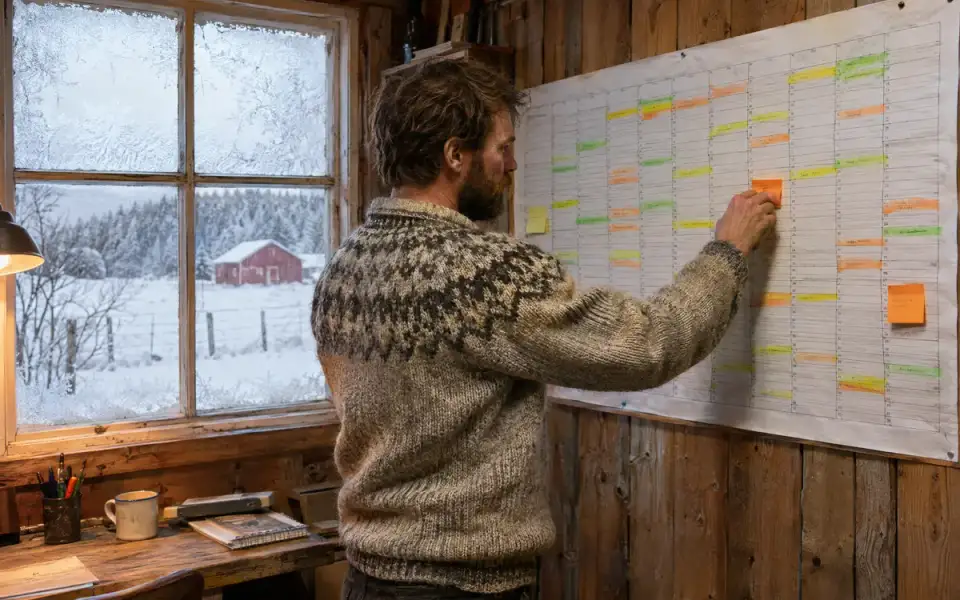
- Build the one page weekend grid Top row is your weekends. Rows below: ticket goal, email sends, social posts, ad budget, notes. One spreadsheet, the whole season visible.
- Set the Monday trigger check Every Monday in season, look at last week’s sales and ask: extend the ad budget on this weekend, pull back on that one, add capacity, or push a flash sale.
- Put a name on every send Every email and post gets an owner and a date. Unowned tasks die quietly in October.
None of these templates is the magic. The grid and the trigger sheet are just paper, and plenty of farms have downloaded prettier versions of both and still scrambled through October.
What works is the decision underneath them, made in January while there is still time to think.
The magic is deciding the season is too important to wing.
The off season takes less time than you think
The months between seasons run on about 4 to 8 hours a month of focused work: one or two emails, a light social rhythm, and one planning or platform task. That is it.
The mistake is believing the off season is “off.” It is quieter, but the work continues, and stopping it hands the farm down the road a head start it did not earn.
What changes when you run on a calendar
You stop running last minute discounts. Most “buy now” panic campaigns come from an empty weekend nobody saw coming. The calendar sees it coming in time to fix it with a push instead of a price cut.
Your email rhythm stops feeling random. Families learn when to expect you, open rates hold steady instead of decaying, and unsubscribes drop because every message matches the season.
Your ad spend gets cheaper. Cold acquisition in late September costs far more than warm audiences built patiently from June on, especially when you are targeting families who already visited once.
There is also a quieter change we notice in the owners themselves. October stops feeling like a storm you survive and starts feeling like a plan unfolding. You still work the long days, but you know what each one is for.
Where to start this week
If the whole framework feels like a lot, do the first step only: mark your peak weekends for the coming season and count twelve weeks back. That one act puts you ahead of most farms in the country.
And if you’d rather walk through it with people who build these calendars all year, book a 30-minute call with our team. We also keep a running list of answers to season timing and pre-sale questions, the same ones this calendar grew out of.
Questions owners ask about this
What is the month by month lead-up to a fall season?
Give each month one job. June opens early bird tickets to your email list only. July and August run warm up ads to last year’s guests and send the save the dates email. September puts every peak weekend on sale by the second week and carries your loudest push of the year. By opening day the selling is mostly done, which is the point. Promotion that starts on opening weekend pays peak ad prices to reach families who already made plans.
What is the deadline for putting peak weekends on sale?
For a fall farm, the second week of September, every peak weekend, no exceptions. Work backward from there: ticketing rebuilt by Memorial Day, early birds to the list in June, save the dates in July. Hitting that September date does two things at once. It banks committed families before the weather gets a vote, and it shows you in real numbers which weekends need extra push while there is still time to give it.
What should a farm do for marketing in the off season?
Run a light monthly program instead of going silent. Ask for reviews and send a thank you in December, review the numbers in January and February, wake the list back up in March, send one behind the scenes note a month until opening, rebuild your ticketing pages in April and May, and soft launch early bird tickets to your list in June.
What are the three numbers to pull in the January review?
Last season’s highest revenue day, highest margin day, and the channel that brought the cheapest customers. Block ninety minutes, one spreadsheet, one notebook. Those three answers set the ad budget, the calendar, and the bundle changes for the whole year ahead, and most owners find one quietly outperforming weekend that reshapes the plan. Then March wakes the list back up with a short note about what you are planning.
How much time does off season farm marketing actually take?
In our experience, about 4 to 8 hours a month of focused work. That covers one or two emails, a light social rhythm, and one planning or platform task each month. It is far less effort than the sprint farms run in September after months of silence.
Should a farm keep posting on social media when it is closed?
Yes, lightly. Accounts that go dark for months are slow to come back, and rebuilding reach in August takes weeks you will not have. Two posts a week from April on is enough, using photos from last season and behind the scenes shots of prep work.
How does the email rhythm change across the farm year?
It follows the calendar’s jobs. One short monthly note keeps the list warm from January through May, June brings the early bird invitation, and once tickets are on sale the rhythm moves to weekly. October adds the day before logistics notes, and December closes with a thank you that sells nothing. Families learn when to expect you, which is a big part of why the lists we run hold a 68% average open rate.